Why electrical experience matters when interpreting infrared inspections, identifying potential problems, and protecting critical electrical infrastructure.
Infrared thermography has become an important tool in electrical preventive maintenance. It allows technicians to identify abnormal heat patterns that may indicate developing problems before they result in equipment damage, unexpected downtime, or safety concerns.
But there's a difference between capturing an infrared image and understanding what that image is telling you.
At the recent Southwest Buildings & Facilities Management Expo, one of the most common conversations we had with facility managers was about infrared cameras. Many facilities have invested in thermal imaging equipment and provided training for their maintenance teams, but several shared a similar challenge: interpreting the images and knowing what to do with the findings.
It's a challenge we understand.
An infrared camera is an excellent diagnostic tool, but it doesn't automatically identify the cause of an electrical problem. That requires an understanding of electrical systems, equipment loading, operating conditions, and how different components behave.
At New Phase Electrical, we believe the real value of an infrared inspection isn't just identifying a potential problem. It's understanding what caused it and helping the customer determine the appropriate next steps.
What Can an Electrical Infrared Inspection Tell You?
Electrical equipment naturally generates heat during operation. Breakers, bus bars, transformers, and electrical connections can all operate at elevated temperatures depending on their electrical load and surrounding conditions.
Infrared thermography allows technicians to evaluate temperature patterns and identify abnormalities that may not be visible during a standard visual inspection.
Some of the potential problems an infrared inspection can help identify include:
- Loose or deteriorating electrical connections
- Overloaded electrical circuits or components
- Unbalanced electrical loads
- Failing breakers or other electrical components
- Excessive resistance at electrical terminations
However, not every warm component indicates a problem.
A breaker carrying a higher electrical load may naturally operate at a different temperature than a lightly loaded breaker. Environmental conditions, equipment design, and the materials being inspected can also affect temperature readings.
That's why evaluating the complete picture is so important.
An infrared image can tell you where to investigate, but it doesn't always tell you why the problem exists.
Why Are Amperage Readings Important During an Infrared Inspection?
One of the most valuable tools used alongside infrared thermography is something electricians work with every day: amperage measurements.
When an abnormal temperature is identified, understanding the electrical load can help determine whether the heating is related to an overloaded circuit, an unbalanced load, or a potential connection issue.
For example, if one phase of a three-phase electrical system is operating significantly hotter than the others, our technicians don't automatically assume the component is failing.
We evaluate the operating conditions, including the amperage on each phase, to better understand what may be contributing to the temperature difference.
This additional troubleshooting helps us distinguish between normal operating conditions and issues that require further investigation.
It's an important part of what separates simply taking infrared images from performing a thorough electrical inspection.
A Real Example: An Infrared Inspection Revealed a Loose Connection in Newly Installed Equipment
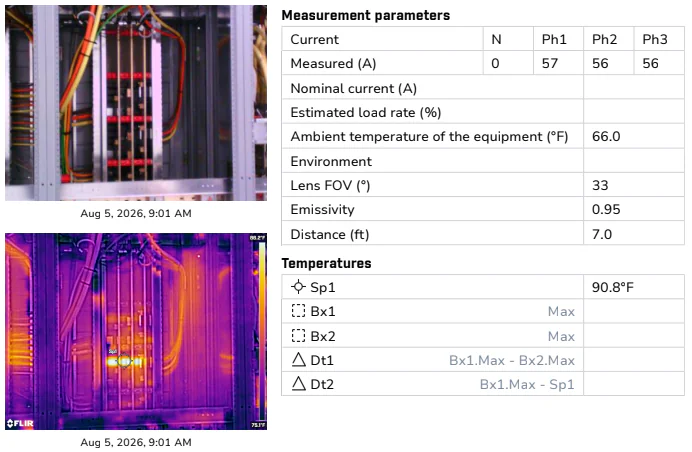
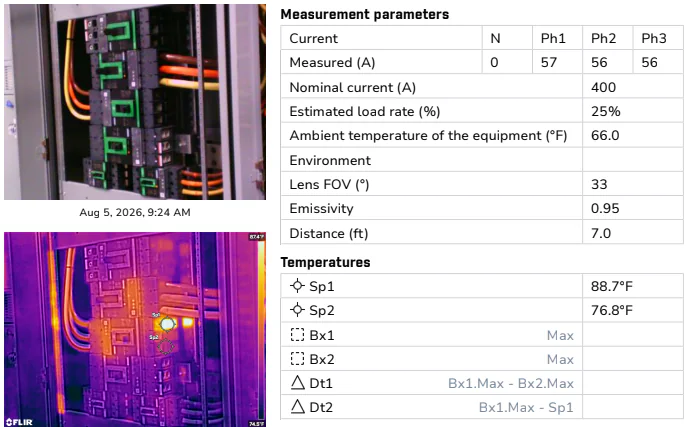
During a recent infrared inspection at one of our customer's facilities, our technicians identified abnormal heating at the A-phase bus connection of an electrical panelboard.
What made this finding particularly interesting was that the equipment had only been installed a few months earlier.
The infrared image showed a concentrated area of elevated temperature, indicating something warranted further investigation.
Rather than assuming the breaker was overloaded, our technicians measured the amperage on all three phases.
The readings were:
| Electrical Phase | Measured Amperage |
|---|---|
| Phase A | 57 amps |
| Phase B | 56 amps |
| Phase C | 56 amps |
The readings were nearly identical, indicating the load was well balanced. This helped our technicians rule out a significant load imbalance as the cause of the abnormal heating.
Further investigation revealed an unseated carriage bolt at the bus bar connection. The bolt wasn't even hand-tight, despite the equipment having been installed only a few months earlier.
The suspected cause was an issue with the bolt's original factory installation.
This is exactly why electrical experience matters when interpreting infrared images.
The camera identified the abnormal heat, but the amperage readings and electrical troubleshooting helped our technicians narrow down the cause.
What Happened Next?
Our team immediately notified the customer and coordinated a plan to address the issue while minimizing disruption to their operations.
Because the affected equipment served a rectifier system, we were able to transfer the electrical load to another rectifier panelboard, allowing the affected breaker to be safely de-energized while a replacement bolt was obtained from the manufacturer.
Once the replacement arrived, we scheduled and completed the repair, re-energized the equipment, and performed a follow-up infrared inspection after 24 hours to verify the repair.
Without the initial inspection, the loose connection could have continued generating excessive heat, potentially resulting in equipment damage or an unexpected outage.
This is a real example of how an infrared inspection, combined with electrical troubleshooting and corrective maintenance, can help prevent a developing problem from becoming a much larger issue.
What Should Be Included in an Electrical Infrared Inspection Report?
Identifying potential problems is only part of the inspection process. Proper documentation is equally important.
An infrared inspection report should provide facility managers and maintenance teams with clear information about the condition of their electrical equipment.
At New Phase Electrical, we document equipment even when no thermal abnormalities are detected.
Our standard infrared documentation includes thermal and corresponding visual images, along with detailed measurement and environmental information such as:
- Spot temperature measurements and temperature ranges
- Emissivity and reflected temperature
- Camera distance
- Atmospheric temperature and transmission
- External optics temperature and transmission
- Relative humidity
These details provide important context for interpreting thermal images and help establish a reference for future inspections.
What Happens When an Issue Is Identified?
When our technicians identify an abnormal thermal condition, we provide additional documentation to help the customer understand the finding.
Our anomaly reports include equipment identification, thermal and visual images, relevant amperage readings and load information, observations, probable causes, priority classification, and recommended corrective actions.
The goal is to provide more than a photograph of a hot spot.
We want our customers to understand what was identified, why it may be a concern, and what steps should be considered to address it.
A quality report should be useful to the people responsible for maintaining the facility, not simply a collection of thermal images.
Why Does Electrical Experience Matter?
Infrared cameras are becoming more accessible, and many facilities are incorporating them into their internal maintenance programs.
We think that's a positive step toward more proactive electrical maintenance.
However, operating an infrared camera and diagnosing an electrical problem require different skill sets.
Thermography training helps technicians understand how to capture and evaluate thermal images, while hands-on electrical experience provides additional insight into the systems being inspected.
At New Phase Electrical, our certified infrared thermographers are also experienced electrical professionals who routinely work with the equipment they're evaluating.
Our team has experience with:
- Service entrance sections and switchgear
- Electrical distribution panels and panelboards
- Transformers
- Automatic transfer switches
- Generator electrical systems
- DC power plants and rectifier systems
- Other critical electrical infrastructure
This combination of experience allows us to evaluate infrared findings within the context of the electrical system, rather than relying on temperature readings alone.
For facilities that already have their own infrared cameras, professional electrical inspections can complement an existing maintenance program by providing additional expertise when abnormal conditions require further investigation.
What Happens After an Infrared Inspection Identifies a Problem?
Finding a potential issue is the beginning, not the end, of the process.
Depending on the severity of the finding, corrective action may involve additional troubleshooting, scheduled maintenance, component replacement, or coordinating a planned electrical outage.
For facilities with critical electrical infrastructure, these decisions often require careful planning to minimize operational disruption.
At New Phase Electrical, we understand the importance of maintaining electrical reliability in environments where unexpected downtime can have significant consequences.
Because we provide both infrared inspection and electrical maintenance services, our team can assist customers beyond the initial inspection, including troubleshooting, corrective work, and follow-up verification when needed.
Our goal is to help customers move from identifying a potential problem to implementing a practical solution.
How Often Should Electrical Equipment Be Inspected?
For many commercial and industrial facilities, annual infrared inspections are a common part of an electrical preventive maintenance program.
However, inspection frequency should be determined by factors such as equipment condition, operating environment, criticality, and applicable maintenance requirements.
NFPA 70B establishes requirements for electrical equipment maintenance, including considerations that affect inspection intervals.
Facilities with heavily loaded equipment, aging infrastructure, or critical electrical systems may require additional attention.
Regular inspections can also help establish a history of equipment conditions, allowing maintenance teams to identify changes and potential developing issues over time.
Even relatively new equipment can have problems, as our real-world example demonstrates.
More Than an Infrared Image — A Proactive Approach to Electrical Reliability
At New Phase Electrical, we believe preventive maintenance should do more than check a box.
It should help facility managers understand the condition of their electrical infrastructure, identify potential problems, and make informed decisions about maintenance and repairs.
Whether we're performing an infrared inspection of a single service entrance section or evaluating electrical equipment throughout an entire facility, our approach is the same: thorough inspections, accurate documentation, and practical recommendations backed by electrical experience.
An infrared camera is a valuable tool. Knowing how to interpret what it reveals is where the real value begins.
Let New Phase Electrical Help Protect Your Facility
New Phase Electrical provides infrared inspections, electrical preventive maintenance, troubleshooting, and corrective electrical services for commercial, industrial, telecommunications, healthcare, and critical infrastructure facilities throughout Arizona.
Whether your facility already has an infrared inspection program or you're looking to establish one, our team can help you better understand the condition of your electrical equipment.
Contact New Phase Electrical to learn more about our infrared inspection and preventive maintenance services.